
Introduction to Calcium Carbonate Grinding Mill
Welcome to our blog post on calcium carbonate grinding mill equipment manufacturers! If you’re in the mining industry or involved in any process that requires grinding calcium carbonate, then you’ve come to the right place. In this article, we’ll explore everything you need to know about these specialized mills and how they can revolutionize your operations.
Calcium carbonate is a versatile compound that finds numerous applications across various industries. From construction materials to pharmaceuticals, its uses are vast and diverse. But before we dive into the details of grinding mills, let’s first understand what calcium carbonate is and why it needs to be ground.
Calcium carbonate is a naturally occurring mineral found abundantly in rocks and minerals. It is composed primarily of calcium ions (Ca2+) bonded with carbonate ions (CO32-). The most common forms include limestone, chalk, and marble. These raw materials contain high levels of calcium carbonate but require further processing to extract pure form for commercial use.

Calcium carbonate grinding mill equipment manufacturer
Grinding mills play a crucial role in this extraction process by reducing large chunks of raw material into fine powders suitable for various applications. With advancements in technology, there are now different types of grinding mills available designed specifically for handling calcium carbonate efficiently and effectively.
In the next section, we’ll take a closer look at some of these different types of grinding mills so you can have a better understanding of their capabilities and choose the one that best suits your requirements! So let’s get started on this exciting journey through the world of calcium carbonate grinding mill equipment manufacturers!


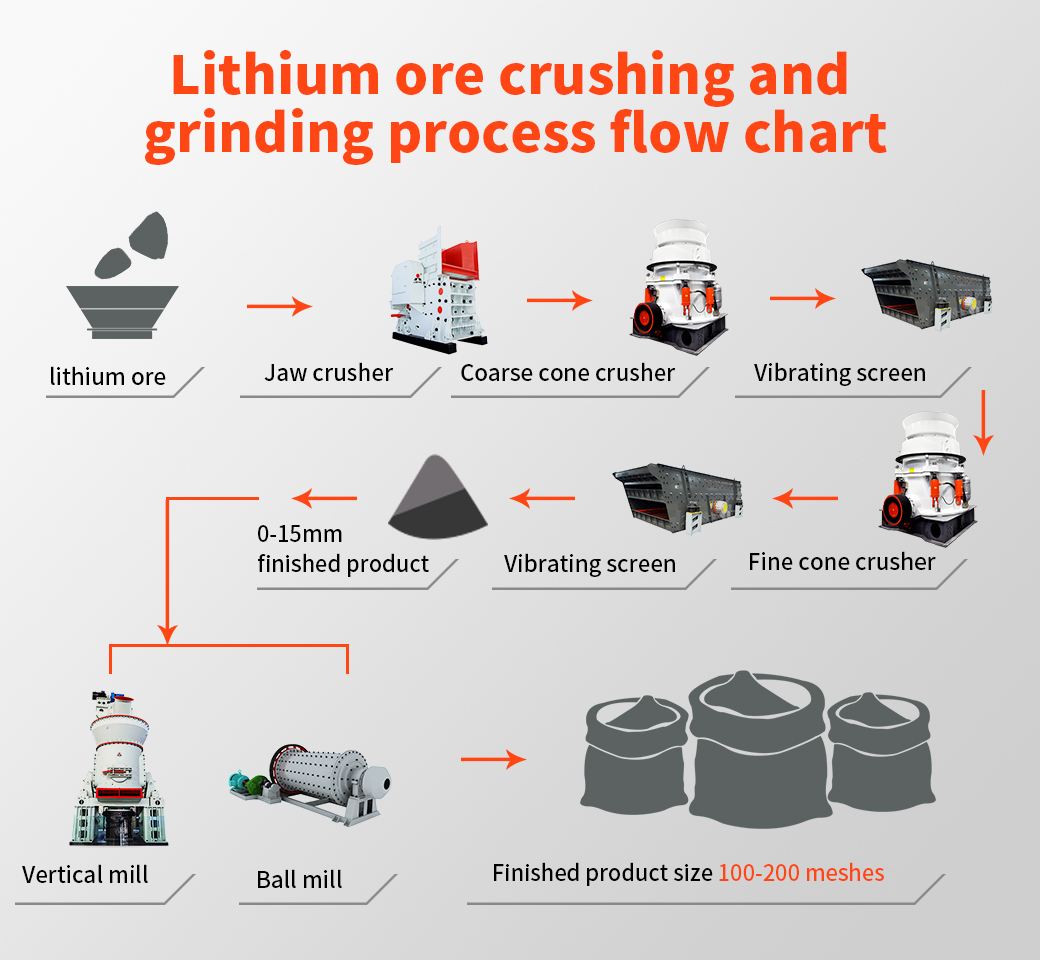 Spodumene: According to the hard rock crushing process, the crushed product is generally 5-40mm, combined with different design requirements of customers, two-end or three-stage crushing, high-grade crushed products (above 4-5%) can be directly used in the metallurgical process to produce lithium carbonate Or lithium hydroxide, the particle size of the finished product is generally around 20-40mm; low-grade generally requires ball mill grinding and separation, and the particle size of the finished product is generally around 5-20mm;